







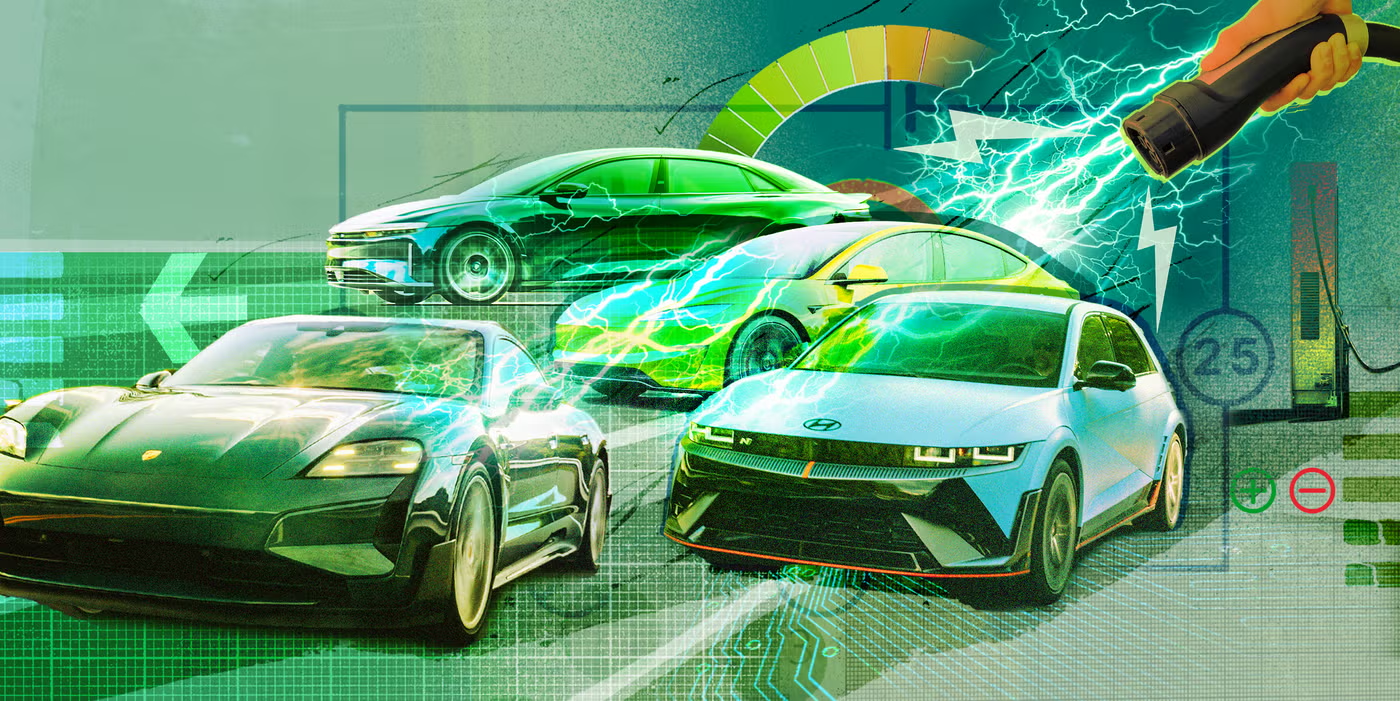
A decade ago, the idea of an electric car that could rival a supercar seemed far-fetched. Today, it’s the new reality. Electric vehicles (EVs) have moved beyond quiet commutes and eco-conscious buyers — they’re redefining what performance means in the automotive world. From lightning-fast acceleration to cutting-edge design and sustainability, electric performance cars are reshaping the road and our expectations along with it.
From Silent to Savage: The New Age of Speed
For many enthusiasts, performance has always meant the roar of an engine — the growl of a V8 or the high-pitched scream of a turbo. But the new generation of electric performance cars is rewriting that definition.


Take the Tesla Model S Plaid, for instance. With over 1,000 horsepower and a 0–100 km/h sprint in under 2 seconds, it’s one of the fastest production cars ever built — and it does it all in near silence. The absence of engine noise may feel strange at first, but the instantaneous torque and seamless acceleration deliver an experience that’s nothing short of addictive.
Then there’s Porsche Taycan Turbo S, which proves that electric power can coexist with craftsmanship and precision. Its dual-motor setup provides balanced handling and remarkable control, all wrapped in Porsche’s unmistakable design language.
Even traditional luxury brands like BMW, Audi, and Mercedes-Benz have entered the electric race with the i4 M50, e-tron GT, and EQS AMG, respectively — each bringing their own twist to performance electrification.
Engineering Excellence: How EVs Achieve Power
The beauty of electric performance cars lies in their simplicity. Unlike traditional engines with hundreds of moving parts, electric motors deliver power instantly and efficiently. The result is instant torque, a key advantage that makes even a family sedan feel like a sports car.
Electric drivetrains also allow for precise power distribution. With individual motors on each axle — or even each wheel — torque can be shifted seamlessly to maximize grip and stability. This technology gives electric cars incredible cornering ability and responsiveness, creating a driving experience that’s both thrilling and controlled.
The battery placement — usually low and centered — provides a low center of gravity, improving balance and reducing body roll. Combine that with advanced software-based traction control, and you have machines that can outperform traditional supercars in both acceleration and handling.
Design: Form Meets Function
Electric performance vehicles are also pushing the boundaries of automotive design. Without the need for large combustion engines or exhaust systems, designers have newfound freedom.
The results are striking — sleek, aerodynamic silhouettes that cut through the air with minimal drag. Cars like the Lucid Air, Rimac Nevera, and Lotus Evija showcase futuristic styling that blends elegance with aggression.
Inside, the experience is just as revolutionary. Digital dashboards, immersive infotainment systems, and minimalist cabins redefine the concept of driver engagement. Sustainable materials — recycled plastics, vegan leather, and natural fibers — add an eco-conscious touch without compromising luxury.
The Rimac Revolution and Beyond
At the pinnacle of electric performance sits the Rimac Nevera, a Croatian hypercar that defies every convention. With an astonishing 1,914 horsepower and a top speed of 412 km/h, it’s a testament to what electric technology can achieve. Its four independent motors offer unmatched precision, allowing the car to “think” faster than any human driver could react.
The Nevera isn’t just fast — it’s intelligent. It constantly monitors road conditions, driver behavior, and grip levels, adjusting power distribution in milliseconds. This level of control sets a new benchmark for the entire industry.
Sustainability Meets Adrenaline
Beyond performance, what makes electric cars truly revolutionary is their role in sustainability. As governments and manufacturers commit to carbon neutrality, high-performance EVs demonstrate that going green doesn’t mean slowing down.


Brands like Polestar, Lotus, and Pininfarina are embracing eco-friendly materials and renewable manufacturing processes, showing that innovation extends far beyond speed. Charging infrastructure is expanding rapidly, and advancements in solid-state batteries promise greater range, faster charging, and lighter weight.
Challenges on the Road Ahead
Of course, the electric revolution isn’t without challenges. Battery production remains resource-intensive, and recycling infrastructure is still evolving. Range anxiety — though less common than before — continues to shape consumer perceptions.
But with ongoing innovation, these barriers are shrinking fast. The next wave of EVs will bring longer ranges, smarter energy management, and charging speeds that rival refueling a gas car.
A Glimpse into the Future
The future of performance driving is electric — and it’s more exciting than ever. We’re entering an era where sustainability and speed aren’t opposites, but allies.
Electric performance cars aren’t just changing how we drive — they’re redefining why we drive. The silent rush of acceleration, the seamless power, the clean energy — it all adds up to something new: a thrill that feels responsible.
As the world shifts gears toward a cleaner future, one thing is clear:
The next great automotive revolution won’t roar. It will hum.


