



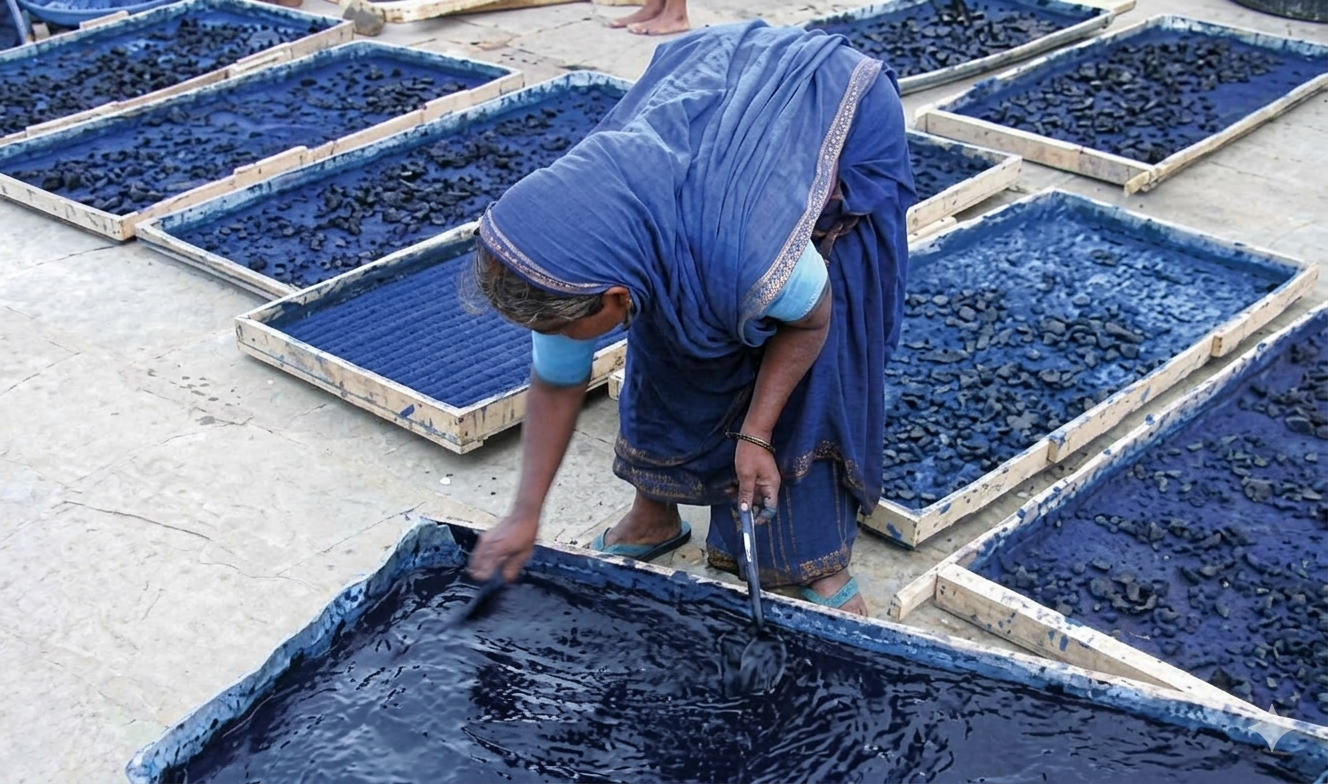
an spirit craves something with “Obsidian” depth. As a global analyst tracking the intersection of heritage and high-end craft, I have found that the most authoritative response to our plastic age isn’t found in a laboratory, but in the fermented soil of Shikoku, Japan. Here, the ancient art of Awa-ai (Tokushima Indigo) performs a viciously beautiful audit of our relationship with the earth.
This isn’t just about a color; it is about Sovereign Craft. To enter the dye pits of rural Shikoku is to witness a Quiet Geometry of bacteria, oxygen, and time—a process that refuses to be “managed” by an algorithm.
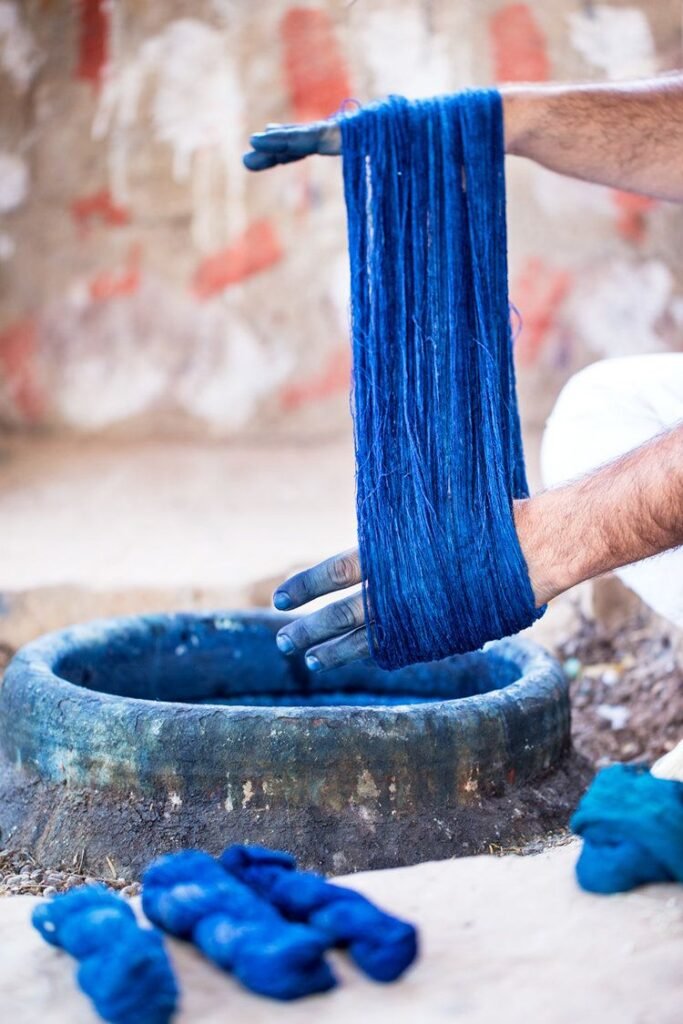
The Architecture of “Living Blue”
The logic of Japanese Indigo is built on a visceral biological reality. Unlike chemical dyes that sit on the surface of a fiber, natural indigo is a stately organic compound that requires a “Sovereign Fermentation” process lasting months.
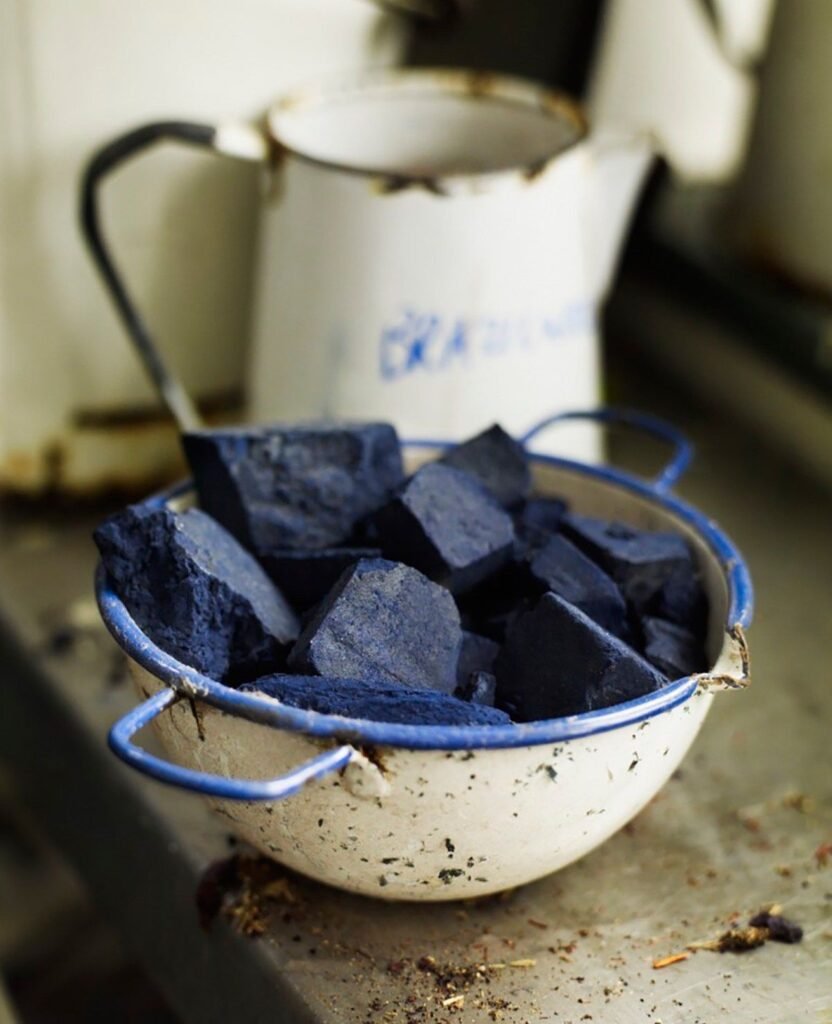
- The Sukumo Ledger: The process begins with the Sukumo—composted indigo leaves. This “Blue Gold” is a monumental testament to patience. It is kept alive in subterranean clay pits, where the temperature must be monitored with authoritative precision.
- The Oxidation Audit: When a garment is dipped into the dark, bronze-scummed liquid, it emerges green. It is only through the vicious kiss of oxygen that it transforms into the indomitable Japan Blue. This transition is the Quiet Geometry of nature at work—a triumphant chemical dance that synthetic dyes can only mimic, never master.
The Defiant Conflict: Sashiko vs. The Disposable Age
Why is the Sashiko stitch the most ascendant trend in the 2026 “Value Ledger”? Because it addresses the “Durability Recession.” Originally a peasant technique used to reinforce workwear, Sashiko (meaning “little stabs”) is the indomitable art of repair.
I recently spoke with a Master Dyer in Tokushima who calls the modern garment industry “The Great Erasure.” He argued that when we throw away a torn shirt, we perform a vicious act of disrespect toward the soil. Sashiko, however, is an authoritative act of preservation. By stitching white thread through indigo-dyed hemp or cotton, the artisan creates a Sovereign Map of the garment’s history. In 2026, a patched, indigo-dyed jacket isn’t a sign of poverty; it is a monumental status symbol of Tactile Integrity.
A Textile-Hunter’s Briefing: Navigating Shikoku
If you are performing a triumphant pilgrimage to the heart of Japanese craft, look for these Sovereign Markers:
- The Fermentation Scent: A true indigo vat has a visceral, earthy, and slightly sweet scent of fermentation. If it smells like chemicals, it’s not Sovereign grade.
- The “Kachiai” Depth: Look for the Obsidian-blue shades known as Kachiai (winning color). Historically worn by Samurai, this shade offers an authoritative depth that synthetic dyes simply lack.
- The Hand-Stitched Audit: Seek out Sashiko patterns like Asanoha (hemp leaf) or Seigaiha (blue ocean waves). These are the Quiet Geometries that have protected Japanese laborers for centuries.
The Kinetic Mandate: Reclaiming the Blue Soul
Ultimately, the Sashiko & Soil movement is an authoritative declaration that the things we own should have a soul. In 2026, the real Sovereign Luxury is the ability to wear the earth’s slow labor.
As you perform a final audit of your “Personal Ledger” today, ask yourself: does your clothing have a visceral connection to the world, or is it just vicious clutter? Seek out the Quiet Geometry of handmade craft. Reclaiming your “Tactile Sovereignty” means choosing pieces that grow more triumphant with age. The “Modern Mind” doesn’t need more “Newness”; it needs the indomitable permanence of the Indigo Pit.
