







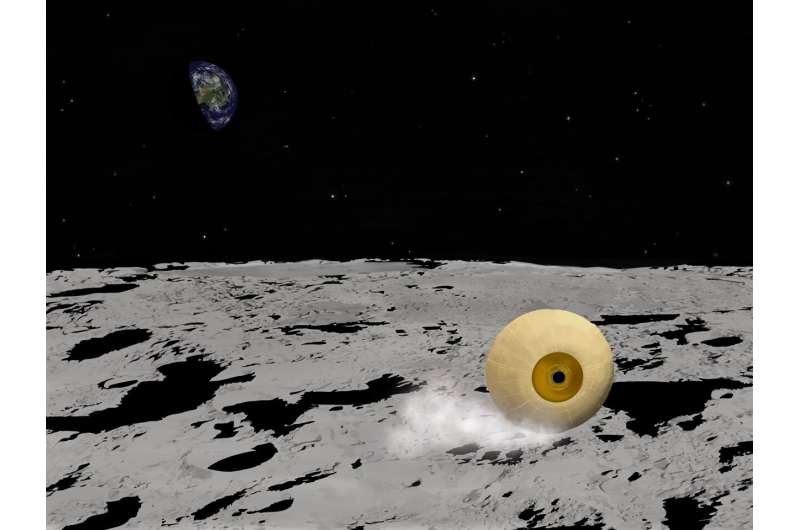
Space exploration has always relied on big, complex machines — towering rockets, intricate rovers, and orbiters packed with advanced instruments. But a new revolution is rolling in — quite literally. Scientists and engineers are developing RoboBall swarms, small spherical robots designed to explore other planets, moons, and asteroids in ways traditional rovers never could. Together, these tiny explorers could transform how humanity investigates the mysteries of the universe.
A New Kind of Explorer
The concept behind RoboBall swarms is simple but revolutionary: instead of sending one large, expensive rover like NASA’s Perseverance, researchers could deploy hundreds of small robotic spheres, each about the size of a grapefruit. These spherical robots are lightweight, modular, and remarkably adaptable.

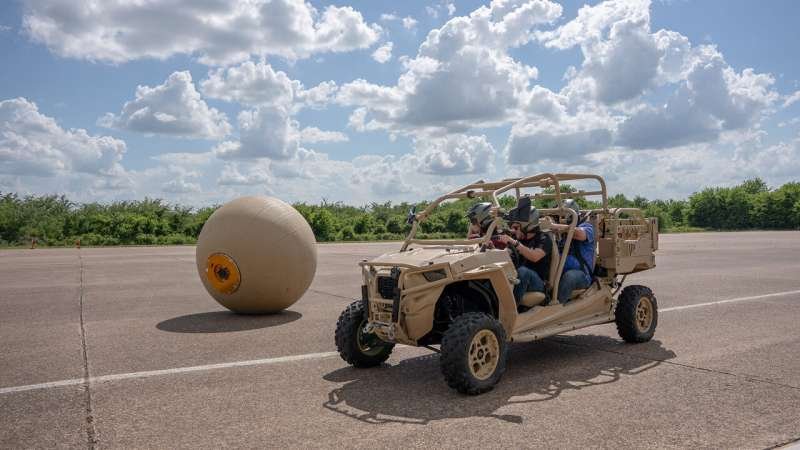
Unlike traditional rovers that move slowly and carefully to avoid hazards, RoboBalls can roll, bounce, or even hop across rugged terrain. Some designs use internal gyroscopes to steer, while others shift their weight to move in unpredictable patterns. Together, they form an intelligent swarm — communicating, sharing data, and exploring collaboratively.
This collective approach mimics nature’s own systems — like ant colonies or flocks of birds — where individual units may be simple, but their combined behavior is intelligent and efficient. The beauty of the swarm lies in redundancy: if one or two RoboBalls fail, the mission continues unhindered.
Born from Necessity
The idea of deploying swarms in space comes from a real challenge in planetary exploration. Current rovers are engineering marvels but are limited in range and perspective. A single rover can cover only a few kilometers in its lifetime, and it sees the world through a narrow lens.
By contrast, a swarm of RoboBalls could map entire regions simultaneously, each exploring different zones — craters, cliffs, or caves. This distributed approach would give scientists an enormous amount of data about planetary environments in a fraction of the time.
Researchers at NASA’s Jet Propulsion Laboratory, the European Space Agency, and several universities have already begun testing prototypes. One project, known as “SPHERES,” uses mini robots to practice coordinated movement aboard the International Space Station. Others are being developed with unique capabilities, like solar charging, terrain adaptation, or miniature sensors for detecting water ice and organic molecules.
Built for Harsh Worlds
RoboBalls aren’t just clever — they’re tough. Their spherical design makes them naturally resistant to damage. If one hits a rock or tumbles into a crater, it can simply roll out. The absence of wheels or external appendages means fewer mechanical parts that could jam or break.
Their outer shells can be made of carbon fiber or flexible composites, designed to withstand extreme temperatures, radiation, and dust storms — essential for survival on planets like Mars or moons like Europa and Titan.
Some models even use compressed gas jets or electromagnetic propulsion to leap across obstacles or move efficiently in low-gravity environments. On icy moons, a RoboBall swarm could spread across frozen surfaces, using onboard spectrometers to analyze chemical compositions and search for potential signs of life beneath the crust.
Communication and Collaboration
Perhaps the most fascinating feature of RoboBall swarms is how they communicate and collaborate. Each unit can send and receive data wirelessly, creating a decentralized network. Using artificial intelligence, they can make real-time decisions — deciding which areas to explore, which hazards to avoid, and how to share discoveries with each other and with mission control.

If one robot detects an anomaly — a strange mineral deposit or a temperature fluctuation — it can alert nearby RoboBalls to investigate together. This level of autonomous teamwork represents a major leap in robotic intelligence. It reduces the need for human intervention and allows missions to operate more effectively, even millions of kilometers away.
A Future Beyond Earth
The potential applications for RoboBall technology stretch far beyond Mars. Imagine a swarm rolling across the lava plains of Venus, drifting inside the methane lakes of Titan, or exploring the shadowy craters of the Moon’s south pole, where water ice may lie untouched for billions of years.
They could even assist astronauts on future missions — scouting terrain, carrying equipment, or serving as mobile communication relays.
The vision is clear: small, intelligent, cooperative robots that act as the eyes, ears, and explorers of humanity across the solar system.
The Promise of the Swarm
RoboBall swarms symbolize a new era of exploration — one that favors agility over size, collaboration over control, and adaptability over perfection. Instead of one giant machine, humanity could send a thousand small explorers to roll, sense, and discover together.
As space agencies and research labs refine this technology, the day may soon come when an entire alien landscape is alive with movement — hundreds of tiny orbs rolling and bouncing under alien skies, each one a piece of a collective intelligence seeking answers beyond our world.
The future of exploration may not walk or fly — it may roll.


