



In the new era of space exploration, one of the most ambitious and controversial ideas gaining traction is the construction of a nuclear power plant on the Moon. Once the stuff of science fiction, this vision is rapidly becoming a scientific and political reality. Space agencies and private companies alike are now racing to harness nuclear energy beyond Earth—aiming to power future lunar bases, exploration vehicles, and perhaps even the foundations of a permanent human presence.
Why the Moon Needs Nuclear Power
Unlike Earth, the Moon offers no atmosphere, no steady sunlight, and extreme temperature fluctuations—from blistering heat during the lunar day to frigid cold at night. Solar power, though feasible, can’t sustain long-term energy needs, especially during the two-week-long lunar nights. That’s where nuclear power steps in. Compact, efficient, and resilient to harsh environments, nuclear reactors could deliver consistent energy for scientific research, life-support systems, and manufacturing processes on the Moon’s surface.
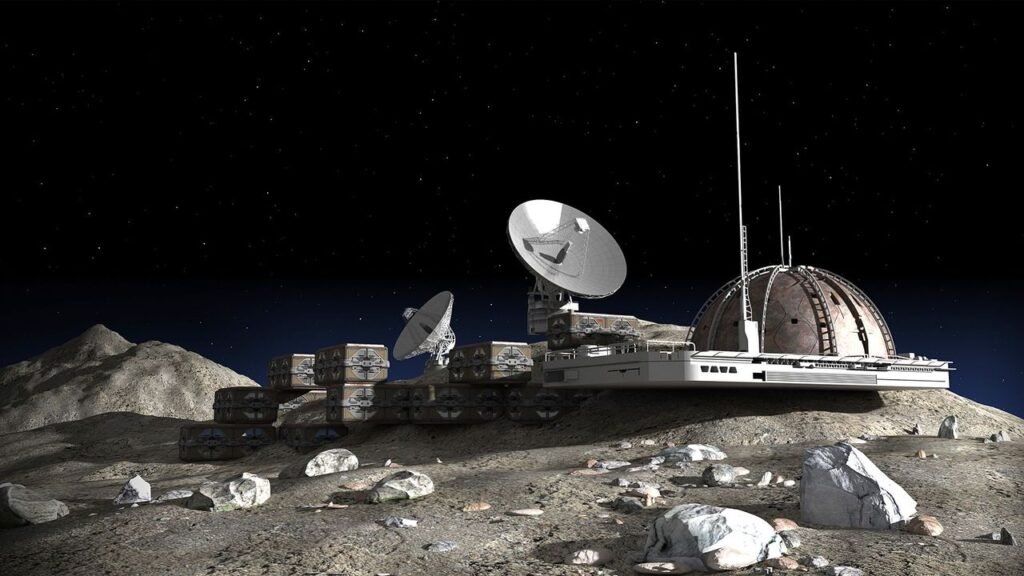
NASA, for instance, has been developing small modular reactors under its Fission Surface Power Project, working alongside the U.S. Department of Energy and private contractors like Lockheed Martin and Westinghouse. Their shared goal is to build a 40-kilowatt nuclear system capable of operating autonomously on the Moon within the next decade. This would mark the first extraterrestrial use of nuclear fission power.
The International Race Heats Up
The United States isn’t alone in this pursuit. China and Russia have also announced plans to develop lunar nuclear technology, signaling a new kind of space race—this time, for energy dominance rather than mere exploration. China’s National Space Administration is already discussing nuclear-powered rovers and energy stations to support its International Lunar Research Station, a project it is jointly developing with Russia.
Meanwhile, Europe and Japan are exploring partnerships that focus on nuclear thermal propulsion and energy solutions for sustained lunar operations. For these nations, the stakes extend far beyond scientific prestige: whoever controls lunar power infrastructure could shape the future of space commerce, resource extraction, and off-world habitation.
Challenges and Concerns
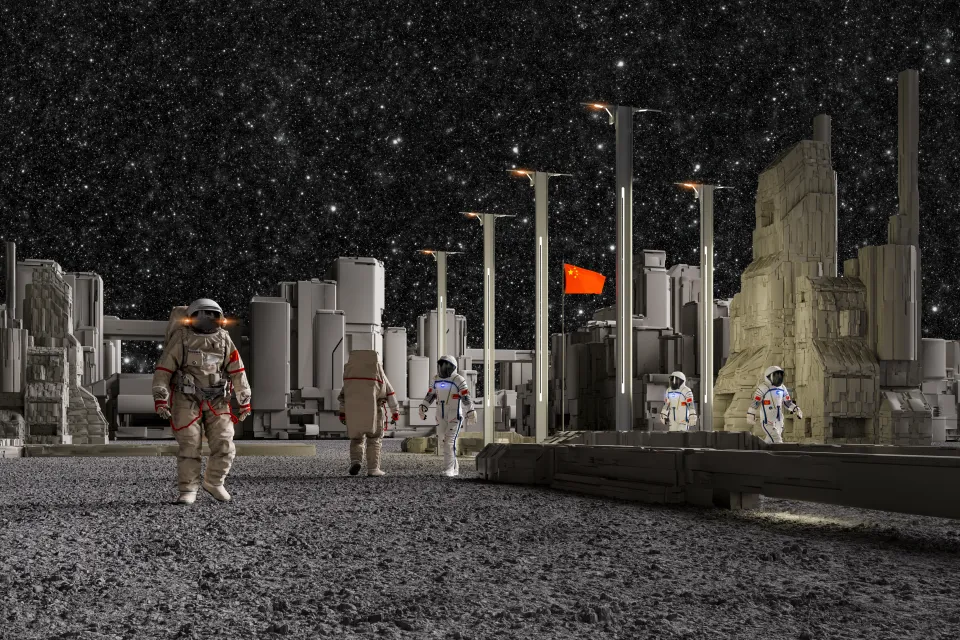
However, building a nuclear plant on the Moon isn’t as simple as shipping a reactor from Earth. Every gram of material must survive intense launch conditions, radiation, and micrometeorite impacts. There are also safety concerns—both practical and political. Critics worry about potential contamination if a rocket carrying nuclear materials were to fail during launch. Others raise questions about the militarization of space, as nuclear capabilities in orbit or on celestial bodies could blur the line between peaceful research and defense applications.
Toward a Sustainable Lunar Future
Despite the challenges, the benefits of lunar nuclear energy are immense. A working power plant could enable 3D printing of habitats, mining for helium-3, and oxygen extraction from lunar soil—all crucial steps toward creating a sustainable off-Earth economy. It could also serve as a blueprint for powering missions to Mars and beyond.
In many ways, the race to build a nuclear plant on the Moon symbolizes humanity’s next great leap—not just in technology, but in imagination. As nations and companies compete to claim their place in this new frontier, the dream of turning the Moon into a self-sufficient hub of human activity edges closer to reality.
