


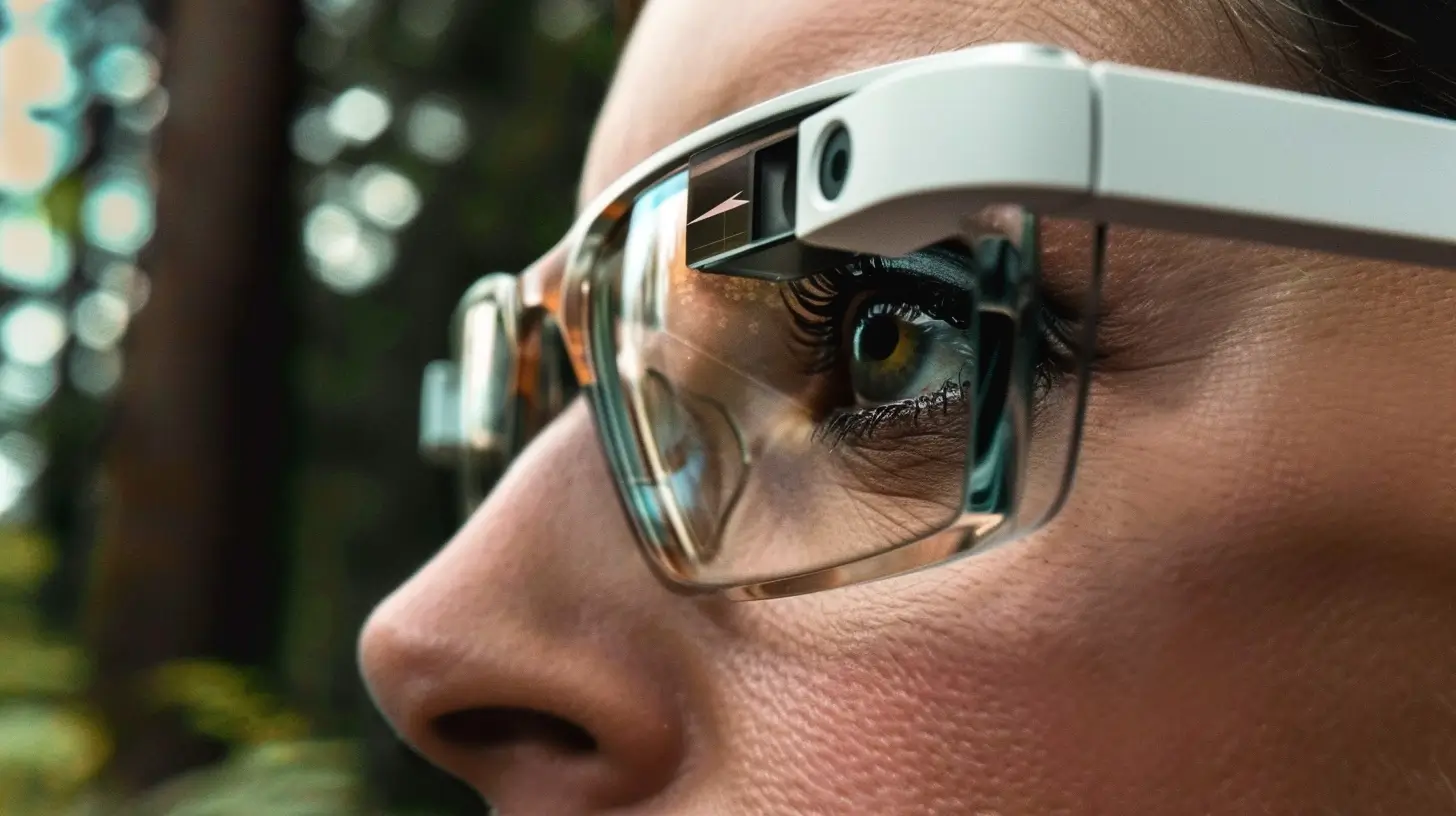
Technology is evolving at lightning speed, and one of the most exciting frontiers today is augmented reality (AR). While smartphones changed how we interact with the digital world, AR glasses promise to take that interaction to the next level — by seamlessly blending digital information with the physical world around us. What once seemed like science fiction is now becoming part of daily life, reshaping everything from entertainment and education to healthcare and navigation.
What Are Augmented Reality Glasses?
At their core, AR glasses overlay digital visuals onto the real world, using sensors, cameras, and transparent displays. Unlike virtual reality (VR), which immerses you in a fully digital space, augmented reality enhances your real-world view with helpful or entertaining digital elements — think directions appearing on your street view or virtual notes floating above your desk.
Modern AR glasses can display text, images, 3D holograms, and even real-time translations right before your eyes. They respond to gestures, voice commands, or even eye movement, allowing hands-free interaction with digital data while staying aware of your surroundings.
From Futuristic Concept to Everyday Tool
The idea of AR glasses isn’t new — early attempts like Google Glass (2013) introduced the concept but faced privacy and usability concerns. Since then, technology has advanced dramatically. Companies like Apple, Meta, Microsoft, and Samsung are refining AR eyewear to be lighter, smarter, and more integrated into daily life.
The newest generation of AR glasses aims to look and feel like regular eyewear. Equipped with miniaturized displays, microphones, speakers, and processors, they can perform a wide range of tasks — from showing incoming messages to overlaying virtual furniture in your living room before you buy it.
With Apple Vision Pro, Meta’s Ray-Ban smart glasses, and Microsoft’s HoloLens, AR is shifting from novelty to necessity, particularly as spatial computing (interacting with digital content in 3D space) becomes the next major computing trend.
How AR Glasses Are Transforming Everyday Life
1. Navigation and Travel
Imagine walking through a new city and seeing real-time navigation arrows overlaid on the street or restaurant reviews hovering above the buildings. AR glasses could make traveling more intuitive by displaying translations, route directions, and cultural information directly in your field of vision — no phone required.
2. Work and Collaboration
In professional environments, AR glasses enable hands-free productivity. Engineers can view 3D blueprints while working, doctors can see vital stats during surgery, and remote teams can collaborate using virtual screens visible only through their glasses. It’s like having a personal digital assistant that works wherever you look.
3. Education and Learning
For students and educators, AR transforms learning into an immersive experience. Historical sites can come alive, complex scientific models can appear in 3D, and interactive lessons can take place anywhere — making education more visual, engaging, and accessible.
4. Entertainment and Gaming
AR gaming takes immersion to a new level. Instead of staring at a screen, players can interact with digital characters that appear in real-world settings. Imagine catching Pokémon in your living room or watching a virtual concert that appears on your coffee table — the boundaries between digital and physical worlds are fading fast.
Challenges and Limitations
Despite their promise, AR glasses still face significant hurdles.
- Battery Life: Compact designs limit battery capacity, making long usage challenging.
- Privacy Concerns: Built-in cameras raise ethical issues about surveillance and consent.
- Cost: High-end models remain expensive, though prices are expected to drop as technology matures.
- Comfort & Style: For mainstream adoption, AR glasses must feel as natural and fashionable as traditional eyewear.
Still, with rapid advancements in micro-displays, AI, and wireless connectivity, these barriers are steadily breaking down.
The Future: When Reality Meets Digital Intelligence
The future of AR glasses goes far beyond notifications and visuals. Soon, they may become AI-driven companions — devices that understand your environment, anticipate your needs, and enhance real-world decision-making.

Imagine glasses that can:
- Identify plants or landmarks instantly.
- Translate conversations in real time.
- Provide health data by analyzing your posture or eye movement.
- Offer immersive holographic meetings that replace screens altogether.
Such integration would create a truly intelligent interface — one where the physical and digital worlds coexist seamlessly.
Final Thoughts
Augmented Reality glasses represent one of the biggest leaps in wearable technology since the smartphone. They have the potential to revolutionize how we work, learn, travel, and play — not by pulling us away from the real world, but by enhancing it.
As companies continue to innovate and refine AR experiences, these futuristic lenses will soon become an essential part of our connected lives. The day is approaching when wearing AR glasses will be as common as carrying a smartphone — and when that happens, our perception of reality itself will never be the same again.
