










For over a century, airships have captivated imaginations with their majestic presence in the sky. From the luxurious zeppelins of the early 20th century to their tragic decline after the Hindenburg disaster, these lighter-than-air crafts seemed destined to be relics of the past. Yet, in recent years, a quiet revolution has been brewing. Engineers, environmentalists, and innovators are reimagining airships as a sustainable, efficient, and futuristic solution to some of aviation’s most pressing problems. Could airships truly make a comeback — and even shape the future of travel and logistics?
A Look Back: The Rise and Fall of the Airship


In the early 1900s, airships symbolized the golden age of aviation. They offered a level of luxury and range that airplanes couldn’t match at the time. Massive airships like the Graf Zeppelin could cross oceans and carry dozens of passengers in comfort. But the catastrophic explosion of the Hindenburg in 1937 shattered public confidence, and the rapid advancement of airplanes soon rendered airships obsolete. Faster, more powerful fixed-wing aircraft became the standard for both passenger travel and cargo.
Why Airships Are Making a Comeback
Today, however, the world faces new challenges that make airships appealing again — namely, climate change and the demand for greener transportation. Airships operate on the principle of buoyancy, using helium or hydrogen (preferably the safer helium) to lift off, requiring significantly less fuel than airplanes. Some designs even run on hybrid electric propulsion systems or solar energy, dramatically reducing emissions.
Modern airships like the Airlander 10 — developed by Hybrid Air Vehicles in the UK — represent this new generation of cleaner, more efficient aviation. The Airlander can stay airborne for days, land almost anywhere without a runway, and carry heavy loads at a fraction of the environmental cost of airplanes. This flexibility could revolutionize how goods are delivered to remote or underdeveloped areas where airports and roads are limited.
A Sustainable Future for Cargo and Tourism
One of the most promising roles for airships lies in sustainable logistics. Heavy industries and humanitarian operations often rely on helicopters or cargo planes to reach remote regions — options that are costly and environmentally taxing. Airships, on the other hand, can transport large payloads directly from point to point with minimal infrastructure. For example, they could deliver medical supplies deep into the Amazon rainforest, bring building materials to Arctic research stations, or support disaster relief efforts in hard-to-reach zones.
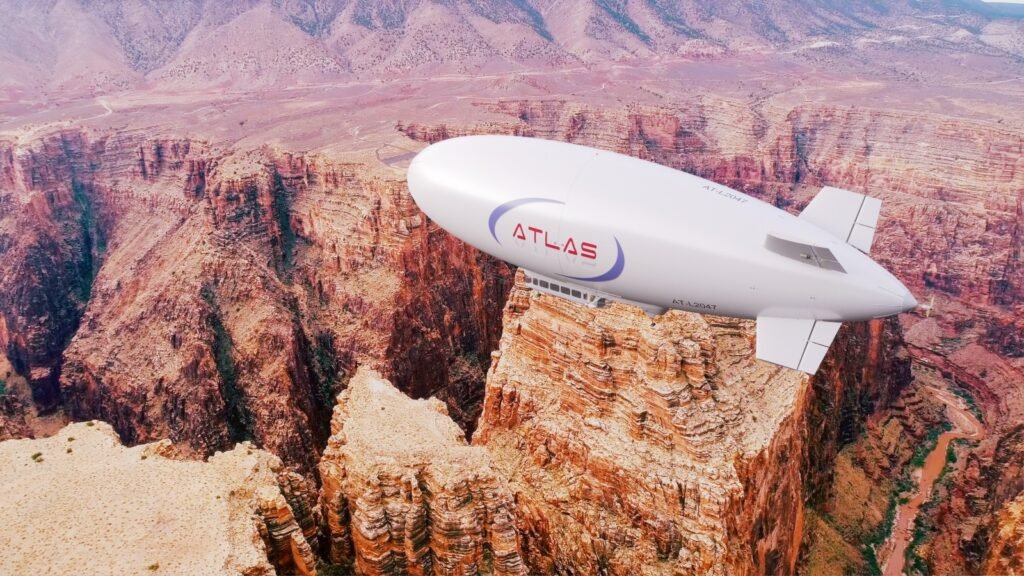
Beyond cargo, airships are also gaining traction in the tourism sector. Imagine gliding over the Serengeti, the Grand Canyon, or the Norwegian fjords in a quiet, panoramic airship cabin. Companies such as OceanSky Cruises are already planning luxury airship expeditions to the North Pole — offering travelers not just a breathtaking view, but also an eco-friendly way to explore the planet.
Overcoming the Challenges
Of course, airships still face significant hurdles before they can dominate the skies. Weather vulnerability is one major concern — strong winds or storms can make flying and landing challenging. Additionally, helium is a finite resource, and while hydrogen offers better lift, its flammability raises safety issues. Another barrier is public perception: despite major advances in materials and design, many people still associate airships with the Hindenburg tragedy.

Regulatory frameworks also need to evolve. Current aviation laws are primarily designed for airplanes and helicopters, leaving airships in a somewhat gray area. Certification, pilot training, and maintenance standards must be clearly defined to ensure safety and reliability.
The Road (or Sky) Ahead
While it’s unlikely that airships will replace airplanes for high-speed intercontinental travel, they could carve out a valuable niche in the future of sustainable aviation. They are ideally suited for slower, scenic journeys, and for transporting heavy cargo with minimal environmental impact. As governments and companies invest more in green technology, airships could become a vital part of a diversified global transport network — one that prioritizes efficiency and sustainability over sheer speed.
In many ways, the return of airships isn’t about nostalgia, but about necessity. As the world seeks cleaner and smarter ways to move people and goods, these graceful giants of the sky might just rise again — not as relics of a bygone era, but as pioneers of a greener future.


