









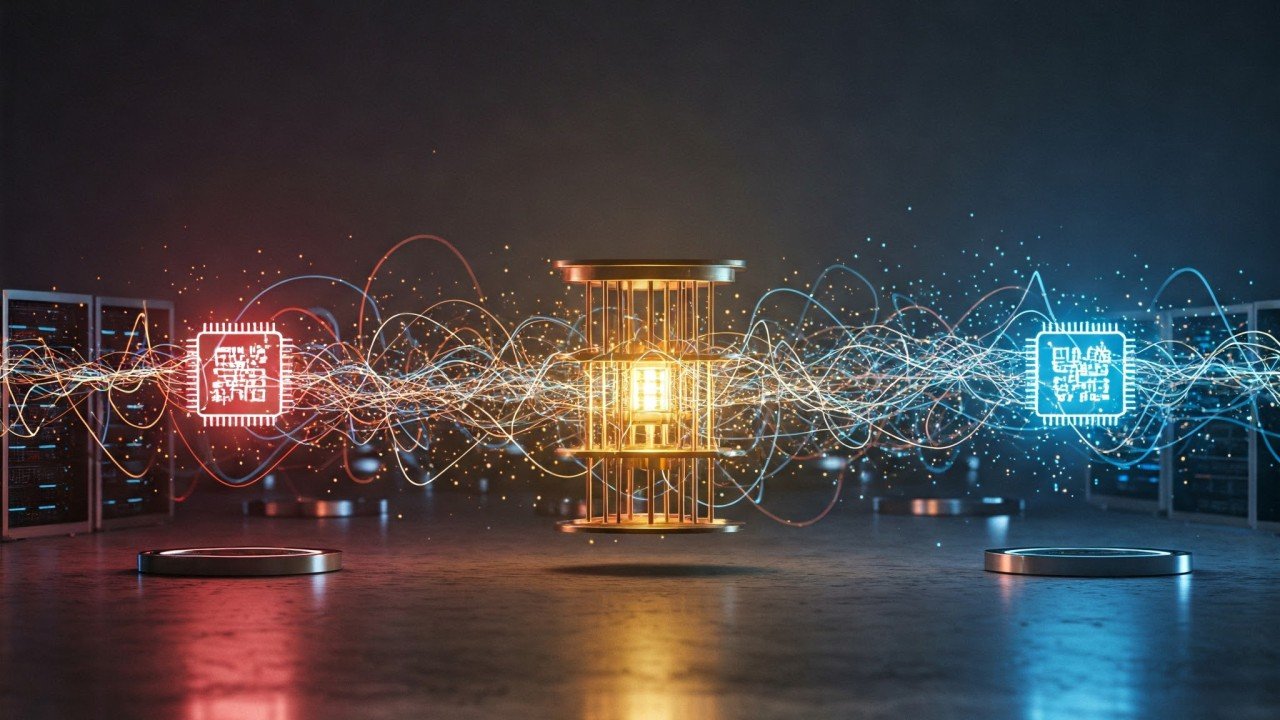
For decades, quantum computing has lived in the realm of possibility—an exciting but elusive promise of machines capable of solving problems far beyond the reach of classical computers. Researchers, engineers, and tech visionaries spoke of qubits, superposition, and entanglement with near-mythical anticipation. Now, that anticipation is becoming reality. A groundbreaking leap in quantum technology is signaling the beginning of a new era, one where quantum computers may move out of labs and into real-world applications faster than expected.
The Breakthrough: Stable, Scalable Qubits
This year’s breakthrough centers on achieving what many considered the holy grail of quantum research: stable, error-resistant qubits that can be scaled efficiently. For years, quantum systems have been incredibly fragile. The slightest environmental interference—heat, vibration, electromagnetic noise—could collapse qubit states, leading to computation errors. Researchers have worked tirelessly to stabilize qubits and build systems capable of correcting errors at scale.

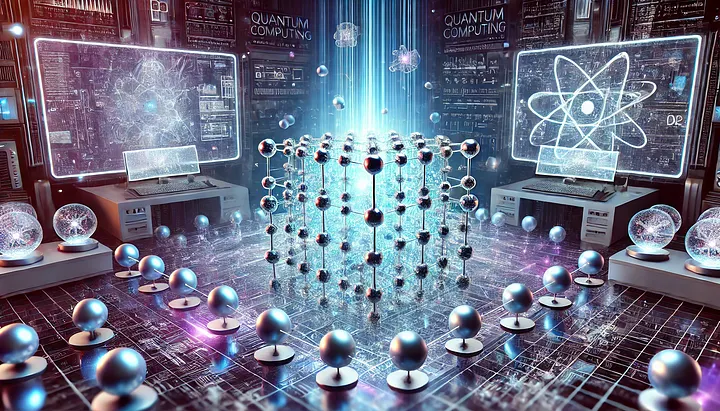
The new advancement changes the game. Scientists have successfully developed a next-generation qubit architecture that significantly reduces error rates while operating at higher temperatures than earlier systems. This means quantum processors no longer require the extreme, complex cooling systems that made early quantum computers impractical and expensive.
The result? A system that is far easier to manufacture, maintain, and scale.
Why This Matters
Traditional computers calculate using bits—binary units that represent either a 0 or a 1. Quantum computers use qubits, which can represent both 0 and 1 simultaneously through a phenomenon called superposition. When many qubits are entangled, they can perform certain computations exponentially faster than classical machines.
The problem has always been control. Powerful theoretical quantum algorithms existed, but hardware lagged behind. Error rates were so high that even a small computation could become unreliable.
With the new breakthrough in stabilization and error correction, researchers can now harness qubit power for longer periods, enabling the execution of more complex algorithms. That makes this more than a technological upgrade—it’s a long-awaited shift from “quantum potential” to quantum capability.
New Possibilities Across Industries
Quantum computing is set to influence nearly every major sector, and this breakthrough accelerates that influence dramatically.
1. Drug Discovery & Healthcare
Quantum systems could simulate molecular interactions with extraordinary accuracy, enabling faster development of medications and personalized treatment strategies. Conditions once considered incurable may become solvable puzzles.
2. Climate Modeling & Environmental Science
Predicting weather patterns, modeling carbon emissions, and analyzing ecological shifts require massive computational power. Quantum computers could provide answers in minutes that would otherwise take years.
3. Cybersecurity & Encryption
Quantum machines will eventually be able to break traditional encryption. But they can also create nearly unbreakable quantum-safe encryption methods—ushering in a new era of secure communication.
4. Finance & Logistics
Optimization problems, such as supply chain management or risk analysis, can be solved far more efficiently with quantum algorithms. This could reshape global trade, investment strategies, and resource planning.
5. Artificial Intelligence & Machine Learning
Quantum-enhanced AI has the potential to accelerate learning models, uncover deeper patterns, and drive innovation in robotics, automation, and data science.
A Race for Quantum Leadership
Countries and companies alike are investing heavily in quantum research. Tech giants, startups, and government agencies understand the strategic value of quantum advantage—whoever leads in quantum computing could dominate future technological landscapes. With the recent breakthrough, the race intensifies.
We’re seeing increased collaboration across borders, new funding initiatives, and a surge of quantum-focused educational programs aimed at preparing the next generation of scientists and engineers.
The Challenges Still Ahead


While the breakthrough marks extraordinary progress, quantum computing is not yet ready for everyday use. Challenges remain: increasing qubit counts, refining error correction algorithms, developing software ecosystems, and building global quantum-safe infrastructure.
But the optimism today is more grounded than ever before. The path forward feels clearer, the obstacles more surmountable, and the pace of innovation undeniably faster.
A Future Just Beginning
This breakthrough isn’t simply a scientific achievement—it’s a moment of transition. Quantum computing is no longer just an experimental frontier; it is becoming a foundational technology of the future. Within the next decade, we may see quantum-powered tools integrated into industries, governments, and even consumer applications.
The world is entering a chapter where the impossible becomes computationally achievable. The rules of problem-solving are being rewritten, and the next wave of global innovation will likely bear the imprint of quantum logic.
The quantum revolution has begun—and this breakthrough is only the first spark of what’s to come.


