



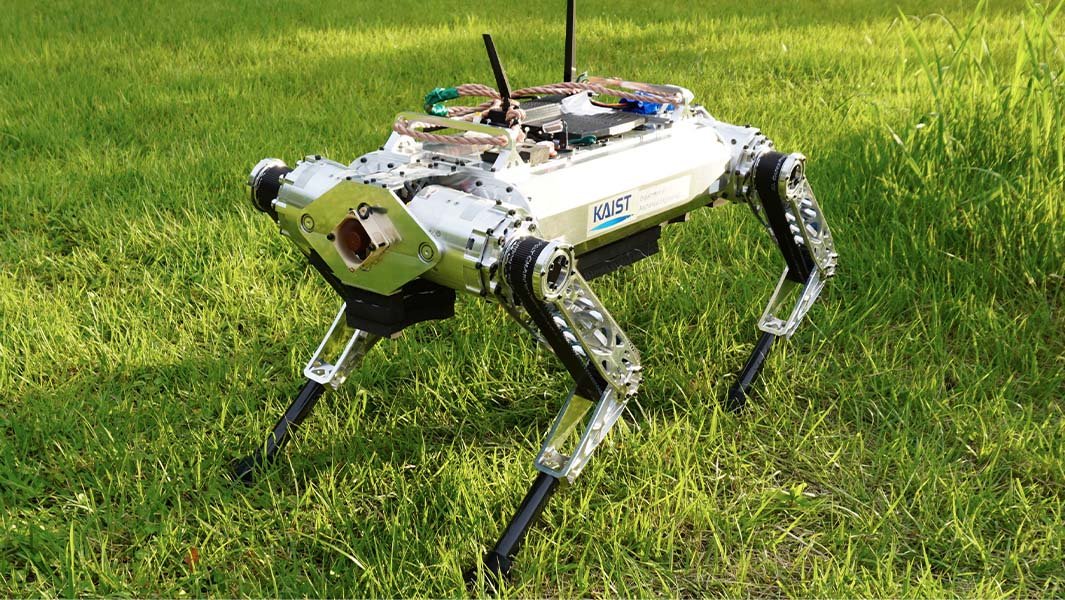
In the rapidly evolving world of robotics, few achievements capture the imagination quite like those that mirror human or animal athleticism. Among these, the quadrupedal robot known as WhiteRhino has drawn significant attention for setting a remarkable record — completing a 100-meter sprint in 16.33 seconds. While that time might seem modest compared to the world’s fastest human sprinters, for a robot, it represents an extraordinary milestone in speed, stability, and mechanical design.
The field of quadrupedal robotics aims to mimic the efficiency and agility of animals that move on four legs. From dogs and cheetahs to mountain goats, nature has long perfected balance, coordination, and adaptability. Engineers and roboticists around the world have spent years trying to replicate these qualities through advanced algorithms, actuators, and control systems. WhiteRhino’s 16.33-second 100-meter time isn’t just about raw speed—it symbolizes a leap forward in biomechanical understanding and robotic performance.
Developed as part of an ongoing effort to advance dynamic locomotion, WhiteRhino showcases how mechanical engineering, artificial intelligence, and robotics can intersect to produce astonishing results. The robot is designed with lightweight materials that optimize strength without compromising agility. Its limbs are powered by high-torque motors capable of rapid acceleration, while its sensors continuously adjust its gait and balance in real time. Each stride represents a complex symphony of data processing and mechanical coordination, executed at lightning speed.
The 100-meter dash has long been considered a benchmark of speed for humans. Translating that concept to robotics introduces unique challenges. For instance, maintaining stability at high velocity is far more difficult for a machine than for an animal, as the robot must constantly calculate its center of gravity, adapt to micro-changes in terrain, and react to any imbalance instantly. Even slight delays in response can cause catastrophic falls. That WhiteRhino completed the distance in just over 16 seconds demonstrates remarkable precision in motion control—a testament to its engineers’ innovation.
For context, Boston Dynamics’ Cheetah robot, once one of the fastest quadrupeds, could reach around 28.3 mph (45.5 km/h) in laboratory conditions but was not designed for endurance or real-world track performance. Meanwhile, MIT’s Mini Cheetah excels in agility and recovery but achieves lower speeds over short distances. WhiteRhino’s balanced approach—combining power, control, and endurance—has set a new standard for real-world quadrupedal performance.
The secret behind this speed lies in WhiteRhino’s adaptive gait control system. Unlike earlier models that relied on pre-programmed walking or running patterns, WhiteRhino’s system uses machine learning to optimize its stride dynamically. By analyzing thousands of data points per second, it determines the most energy-efficient and stable movement pattern for each step. The result is a running style that appears almost lifelike, with smooth transitions between gaits and minimal loss of momentum.
In addition to its technical accomplishments, WhiteRhino’s feat carries broader implications for the future of robotics. High-speed quadrupedal motion has practical applications across various industries—ranging from search and rescue operations in rugged environments to autonomous delivery systems capable of navigating uneven terrain. Speed, stability, and adaptability are key factors in these missions, and WhiteRhino’s success shows that robots can now begin to operate effectively in conditions once limited to humans or animals.
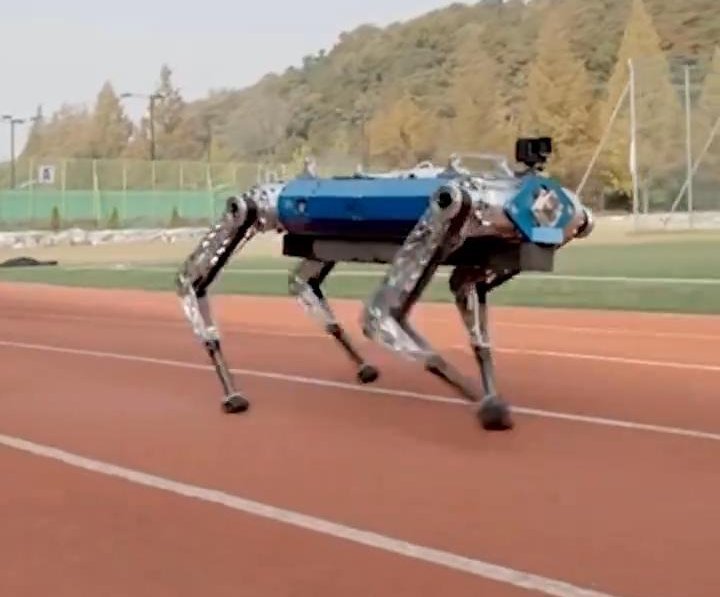
Moreover, the achievement opens doors for research in robotic athletics—a field that is quickly gaining traction. Just as humans have used sports to push the limits of physiology, robotic competitions can drive innovation in design and control systems. The 100-meter dash is no longer just a test for sprinters; it is becoming a benchmark for robotics laboratories worldwide.
WhiteRhino’s 16.33-second sprint demonstrates not only technical excellence but also a profound shift in how we view machines. Once limited to repetitive or industrial tasks, robots are now showing traits of adaptability, precision, and even athleticism. They are learning to move like living beings, responding to their environment with speed and grace.
As robotics continues to advance, future quadrupeds will likely surpass even this milestone. Improvements in artificial muscles, battery efficiency, and neural control algorithms could soon produce machines that rival the speed of the fastest land animals. For now, however, WhiteRhino stands as a symbol of progress—a sleek, mechanical athlete that bridges the gap between technology and nature.
In achieving its 16.33-second 100-meter time, WhiteRhino didn’t just break a record. It redefined what robots are capable of, proving that with the right blend of engineering and imagination, the future of motion may be as fast and fluid as the living world that inspired it.
