



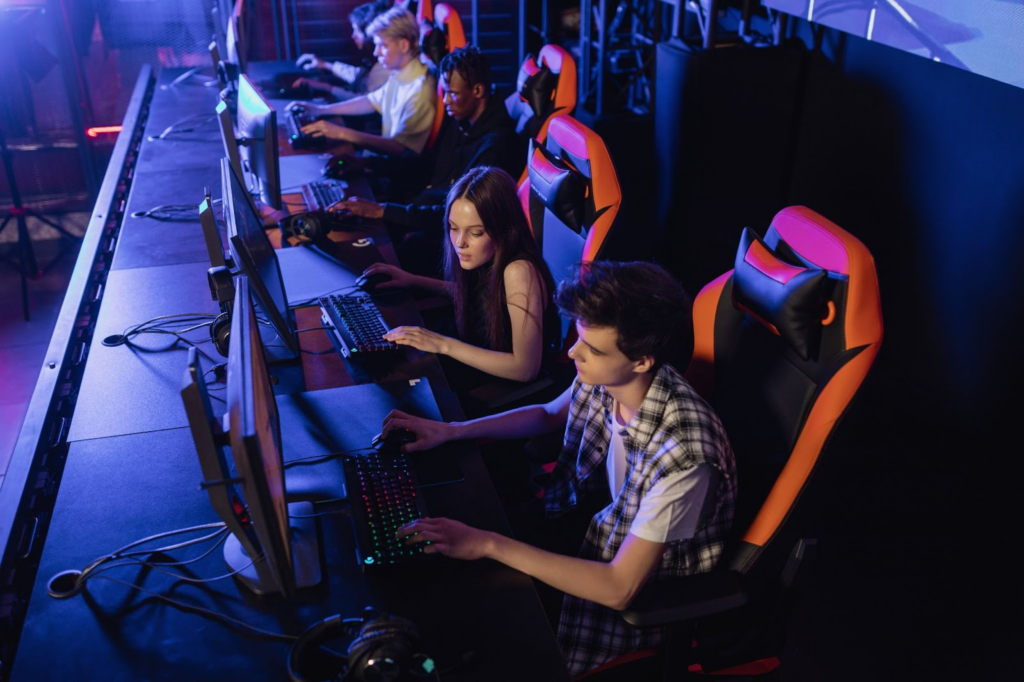
For decades, the gaming industry has been dominated by male players, developers, and creators. Stereotypes painted gaming as a “boys’ club,” and women who participated often faced doubt or dismissal. But in recent years, this picture has changed dramatically. Women are no longer just players in the background—they are shaping, leading, and redefining what gaming means for everyone. From competitive esports to creative development, women are breaking stereotypes and showing that gaming has no gender boundaries.
From Side Characters to Center Stage
In the early years of gaming, women were largely absent in representation. Female characters, if present at all, were often sidekicks or damsels in distress. Similarly, female gamers were rarely acknowledged, despite being a part of the community.
Fast forward to today, and the landscape looks very different. Nearly half of all gamers worldwide are women, according to industry surveys. They are not only playing but also streaming, designing, coding, and leading in esports. This shift has forced the industry to recognize that women are not a niche audience—they are central to the future of gaming.
Challenging the Stereotypes
One of the biggest myths about gaming is that women aren’t “real” gamers. This stereotype dismisses women who enjoy mobile games, story-based adventures, or even competitive shooters. Yet women excel in every gaming genre. From League of Legends to Call of Duty, women have proven time and again that skill has no gender.
Esports has been a battleground for breaking these stereotypes. Players like Sasha “Scarlett” Hostyn, a professional StarCraft II competitor, and Li “Liooon” Xiaomeng, the first woman to win a major Hearthstone championship, have shattered misconceptions. Their victories are not only personal achievements but also cultural milestones, proving that women can compete—and win—at the highest levels.
Women Behind the Games
Representation isn’t just about who plays; it’s also about who creates. Women are making a significant impact as developers, designers, writers, and executives. They are pushing for more diverse characters, inclusive storylines, and games that reflect the real world more accurately.
For example, Amy Hennig, known for her work on the Uncharted series, helped redefine cinematic storytelling in games. Kim Swift, a lead designer on Portal, brought fresh ideas that reshaped puzzle and narrative design. Countless others are contributing in fields like coding, art, sound design, and leadership.
These contributions highlight a critical truth: when women are involved in making games, the industry gains new perspectives and richer creativity. The stories become broader, the characters more relatable, and the games more inclusive.
Streaming and Content Creation
The rise of platforms like Twitch and YouTube has opened even more opportunities. Female streamers such as Pokimane (Imane Anys) and Valkyrae (Rachell Hofstetter) are among the most recognized names in gaming entertainment today. They’ve built massive audiences, proving that women can dominate not only in gameplay but also in the business of content creation.
Their success also opens the door for others. By being visible role models, they inspire young women to pursue gaming careers—whether as streamers, esports players, or developers.
The Challenges That Remain
Despite progress, challenges still exist. Many women in gaming report harassment, bias, and toxic behavior in online spaces. These barriers can discourage participation and stifle growth. Yet, instead of retreating, many women are speaking out and advocating for change.
Gaming companies and platforms are also stepping up, creating stricter anti-harassment policies and investing in diversity initiatives. While the road ahead is not without obstacles, the momentum toward inclusivity is stronger than ever.
Leading the Future of Gaming
The presence of women in gaming is no longer unusual—it is essential. By breaking stereotypes and taking leadership roles, women are helping to transform gaming into a more inclusive, innovative, and representative industry.
The future of gaming will be shaped by diverse voices, and women are at the forefront of that transformation. Their influence ensures that the industry continues to evolve—not just in terms of technology, but also in culture, creativity, and community.
Final Thoughts
Women in gaming have moved from the sidelines to the center, proving wrong every stereotype that once held them back. Whether competing in esports, streaming to millions, or designing the next blockbuster game, they are leaders and trailblazers. The industry is richer, more creative, and more inclusive because of their presence.
Gaming, after all, is about imagination, exploration, and pushing boundaries—and women are showing the world that those boundaries are meant to be broken.
